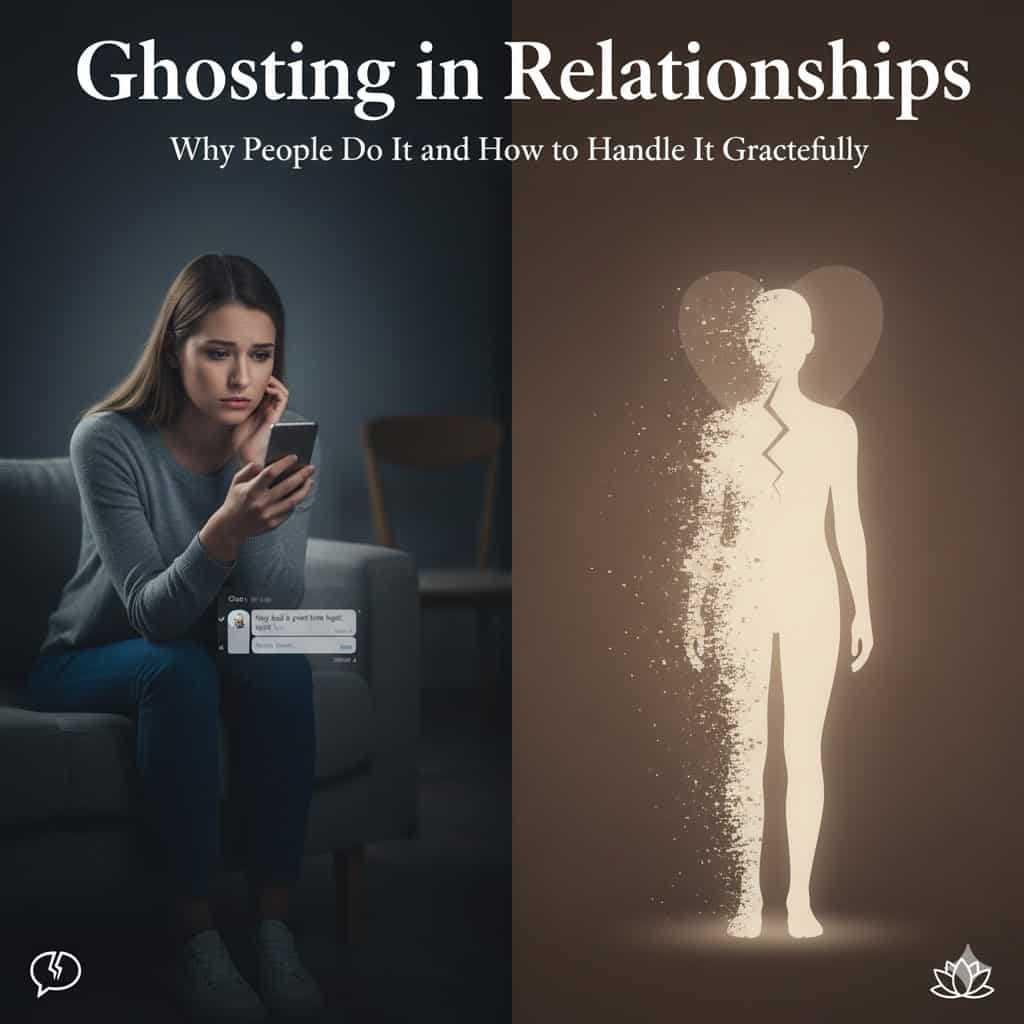
Ghosting in relationships has become increasingly common in dating, friendships, and even professional connections. It occurs when someone suddenly cuts off all communication without explanation, leaving the other person confused, hurt, and questioning themselves. While technology makes ghosting easier than ever, it doesn’t make it any less painful.
In this article, we’ll explore why people ghost, how it affects you, and how to handle ghosting in relationships with grace and self-respect.
What Is Ghosting in Relationships?
Ghosting is the act of disappearing from someone’s life without notice or closure. There’s no goodbye, no explanation, and often no response to repeated attempts at communication.
It can happen in:
- Romantic relationships and dating
- Friendships
- Professional or networking situations
While ghosting may feel personal, it often reflects the ghoster’s emotional capacity, not your worth.
Why Do People Ghost?
The reasons people ghost are usually more about them than you. Here are the most common causes:
1. Avoidance of Confrontation
Many people ghost because they can’t handle uncomfortable conversations. Instead of saying,
“I’m not interested anymore,”
they choose silence to avoid guilt, awkwardness, or emotional responsibility. Ghosting is their way of prioritizing comfort over clarity.
2. Fear of Emotional Responsibility
Some individuals enjoy connection but avoid commitment. When things start to feel serious, they may disappear to escape expectations and accountability. Ghosting becomes their way of protecting themselves from emotional responsibility.
3. Lack of Emotional Maturity
Ghosting is often a sign of poor communication skills rather than cruelty. Emotionally mature people express boundaries, end relationships respectfully, and understand the impact of their actions. Immature individuals often vanish instead.
4. Overwhelm or Personal Struggles
Not all ghosting is intentional or malicious. Some people disappear because they are mentally overwhelmed, anxious, or dealing with personal challenges. While life can be difficult, respectful communication is still important.
5. Too Many Options, Especially Online
Dating apps and social media can make it easy to feel like there’s always someone “better” around. This convenience sometimes leads people to stop investing in current connections and ghost without explanation.
How Ghosting Affects the Person Being Ghosted
Being ghosted in relationships often leads to:
- Self-doubt and overthinking
- Anxiety and emotional confusion
- Loss of trust in others
Remember: being ghosted does not define your value.
How to Handle Ghosting in Relationships Gracefully
Graceful handling of ghosting isn’t about chasing answers — it’s about protecting your dignity and emotional health.
1. Don’t Chase Closure
Sending multiple messages rarely works. If someone wanted to explain, they would have. Chasing closure can lower your self-respect and prolong emotional pain.
2. Don’t Take It Personally
Ghosting reflects the ghoster’s communication style and emotional capacity, not your worth. Separate their behavior from your value.
3. Set a Personal Closure Point
Decide how long you will wait for a response and give yourself permission to move on without explanations. Closure comes from acceptance, not from someone else.
4. Learn and Grow
Ghosting can teach you important lessons about:
- Red flags
- Emotional boundaries
- Healthy communication
Use these experiences to improve future relationships.
5. Choose Grace Over Bitterness
Grace doesn’t mean approval. It means peace. Acknowledge the hurt, accept the silence, and move forward without resentment. Your response is your power.
Final Thoughts
Ghosting in relationships is painful, but it reveals the truth about how others handle discomfort and communication. It reflects their limits, not yours.
You deserve honesty, respect, and clarity — even if you never get it from them. Handle ghosting with grace, protect your emotional health, and focus on relationships that value open communication.
Ghosting in relationships may feel personal, but it is often a reflection of someone else’s inability to communicate honestly.
If you’ve been ghosted:
- Don’t blame yourself
- Don’t chase explanations
- Focus on building connections where communication is consistent and respectful
Handling ghosting gracefully ensures that you maintain dignity and emotional resilience.
