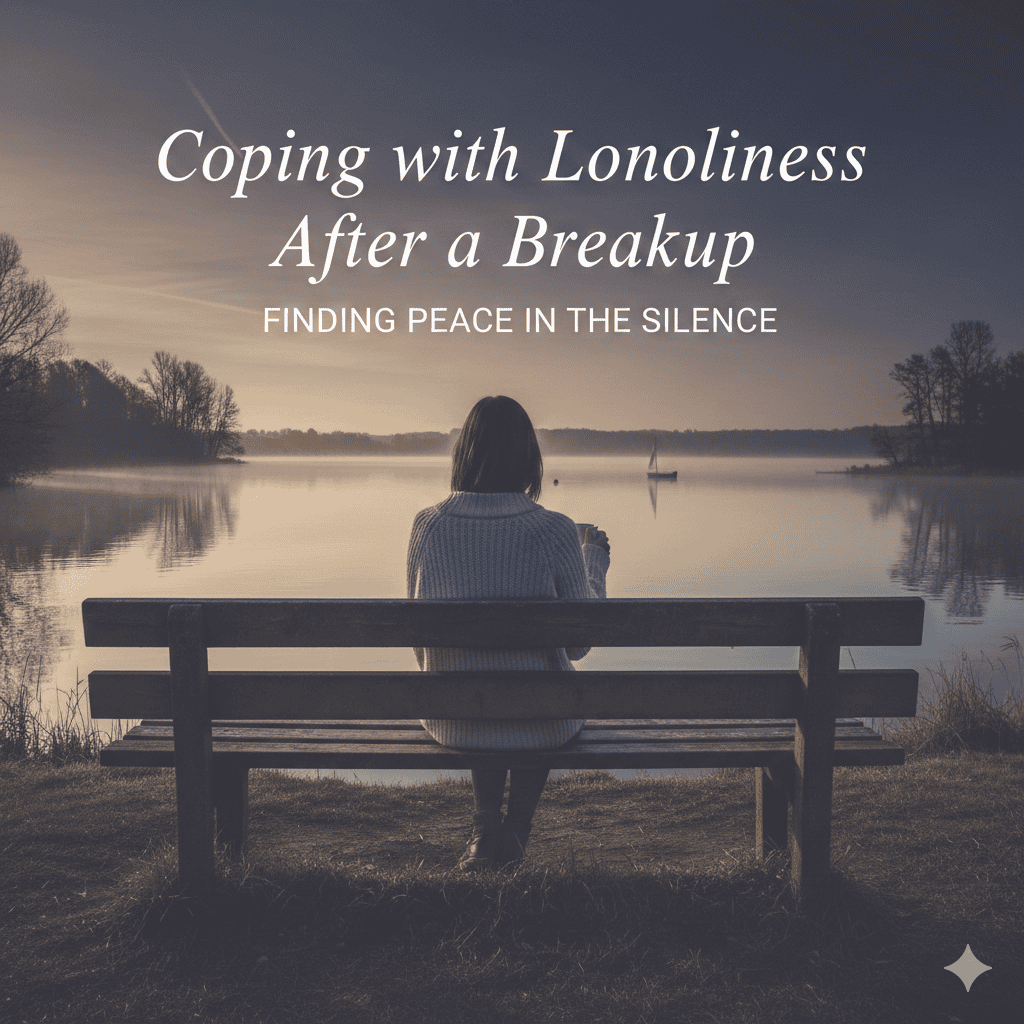
“Relationships are like glass. Sometimes it’s better to leave them broken than hurt yourself trying to put it back together.” — Unknown.
I am at a phase in my life right now where I’m struggling. Coping with loneliness after a breakup is my current reality, and most of the time, I feel a deep sense of disconnection from the world around me and the people I share it with.
The mere fact that I am writing this in the small hours of the morning, deafened by the ear-splitting silence of an empty flat, simply emphasizes this point even harder. This situation was not part of the plan I envisioned for my life, but everything that was once familiar has now changed.
After a six-year relationship ended, I went from sharing a future to facing a daunting silence. For months, I fought to make it work, but the passion was gone. Here is what I’ve learned about the raw process of coping with loneliness after a breakup.
1. Feel Your Emotions (Don’t Numb the Pain)
When you strip away a big part of your life, you feel exposed and vulnerable. During the time after my split, I experienced deep feelings of unshakable isolation. However, I learned that masking those uncomfortable feelings—my escapism being alcohol and meaningless dates—only leaves the pain unattended.
To succeed in coping with loneliness after a breakup, you must accept the loneliness as a true emotion. It will not softly fade away by looking for distractions. Give your emotions the space they need. Write down your thoughts or talk to a friend. Acknowledge that what you are feeling is real. Trust that the pain eventually loses its intensity, making room for calmness.
2. Listen to Your Own Advice
I have indulged in my fair share of self-help books over the years, from guides on depression to tips on beating isolation. While these stories offer fleeting comfort, they cannot take the sting out of raw emotions when you are sitting alone at night.
I have learned to take only the advice that works best for my own mind and spirit. If you prefer staying at home with a book rather than “getting out there,” that is okay. Give yourself a break and restore at your own pace. You are your own best teacher, and only you will know when it feels right to step out of your comfort zone.
3. Realize There is Nothing to “Fix”
We live in a world crammed with busy people, but that doesn’t mean we need to rush around trying to mend everything that is seemingly wrong with us. While coping with loneliness after a breakup, I realized I didn’t need a speedy resolution.
It’s okay to feel lonely; it’s a human emotion. There was no need to search in the wrong places for a solution. My life wasn’t “broken” just because it was now quiet. Try to enjoy the freedom that comes from being detached. Use this time for introspection or to rediscover old, forgotten hobbies.
4. Accept the Current Chapter
Accepting that there is nothing wrong with my feelings gave me the grace to relax. I know that eventually, life will change again; it always does. How I am feeling now may not be a reflection of how I feel in a few months.
Right now, I am experiencing my life as it is. Coping with loneliness after a breakup is just another passing chapter in my story, purposely placed here to keep life meaningful. It may not be a highlight, but it is still part of my life—and I can live with that.
Frequently Asked Questions (FAQ)
Q: How long does the loneliness last after a breakup? A: There is no set timeline for coping with loneliness after a breakup, as every relationship and individual is different. For some, the intensity begins to fade after 3 to 6 months. However, the key is to allow the emotion to exist rather than rushing it; when you stop fighting the loneliness, it often begins to dissipate faster.
Q: Is it normal to feel lonely even if the breakup was my choice? A: Absolutely. You can be the one who initiated the split and still experience deep grief. You aren’t just missing the person; you are missing the routine, the companionship, and the future you had envisioned. Accepting this is a vital part of coping with loneliness after a breakup.
Q: Should I start dating again to stop feeling lonely? A: While it is tempting to find a “rebound” to mask the pain, the author’s experience suggests that “meaningless dates” often leave the pain unattended. It is usually more effective to wait until you feel a sense of “wholeness” on your own before inviting someone else into your life.
Q: What is the difference between being alone and being lonely? A: Being alone is a physical state (being by yourself), while loneliness is an emotional state (feeling disconnected). Coping with loneliness after a breakup involves turning “loneliness” into “solitude”—where you can be alone in your flat without feeling that the silence is “ear-splitting” or negative.
